
What if a dusty breath of air could make you seriously ill? Every year, thousands of Americans develop pneumonia-like symptoms without realizing the cause may be hiding in the soil beneath their feet.
Most of them have never heard of Coccidioidomycosis. Most of us haven’t. It’s a fungal disease, better known as Valley Fever. This soil-borne pest can lodge in your lungs and cause serious respiratory illness. Even if they have heard of it, not many people understand what causes and spreads it. UI Coeur d’Alene PhD student Sarah Davis is on a mission to fix that.
Sarah Davis received a one-year fellowship from the NASA Idaho Space Grant Consortium to study how the enviroment around us affects Valley Fever. Her research builds on the work of Dr. Leda Kobziar who created the field of Pyroaerobiology — the study of how microbes travel through wildfire smoke. Inspired by this research, Sarah is analyzing NASA Earthdata, including global smoke data, to compare it with Valley Fever case rates.
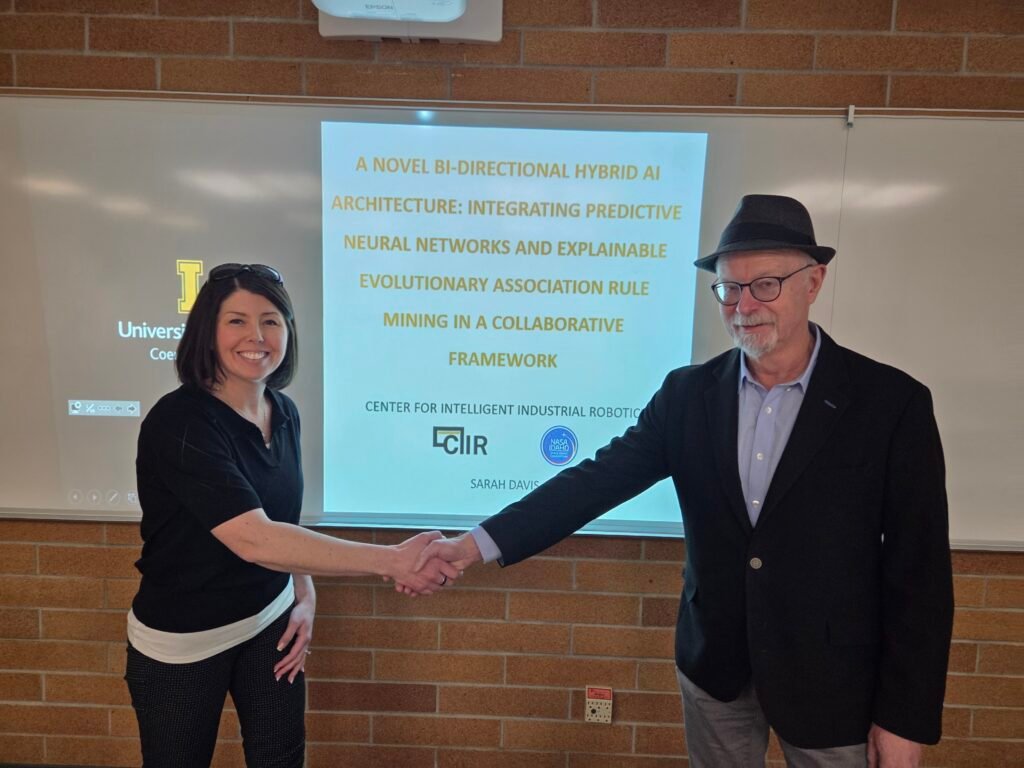
Sarah is researching new artificial intelligence methods that combine advanced prediction models with explainable AI. In summer 2025, she tested a hybrid system that allows multiple AI systems to compare notes and improve together — much like scientists collaborating on the same problem. She now plans to use this approach to predict Valley Fever cases while also identifying environmental factors linked to infection rates. Her goal is to gain new insights that can help guide better disease control practices.
Sarah’s research advisor, Dr. John Shovic, believes Sarah’s AI framework can help to analyze a variety of other environmentally-related medical conditions. If Sarah’s models succeed, future outbreaks may be predicted before patients ever feel sick — turning environmental data into an early warning system for public health.
Watch an overview of Sarah’s research and journey here: